
Cyber Security & Resilience
Why I Refuse to Scare People Into Taking Cyber Security Seriously
I've seen how easily cyber security gets turned into a sales pitch built around frightening business owners about what could go wrong. The threats are real, but I don't believe scaring people into buying products helps them understand how to protect their businesses. I explain why fear-based security advice can do more harm than good, what I'd rather see from the industry and why making cyber security understandable matters far more than making it terrifying.
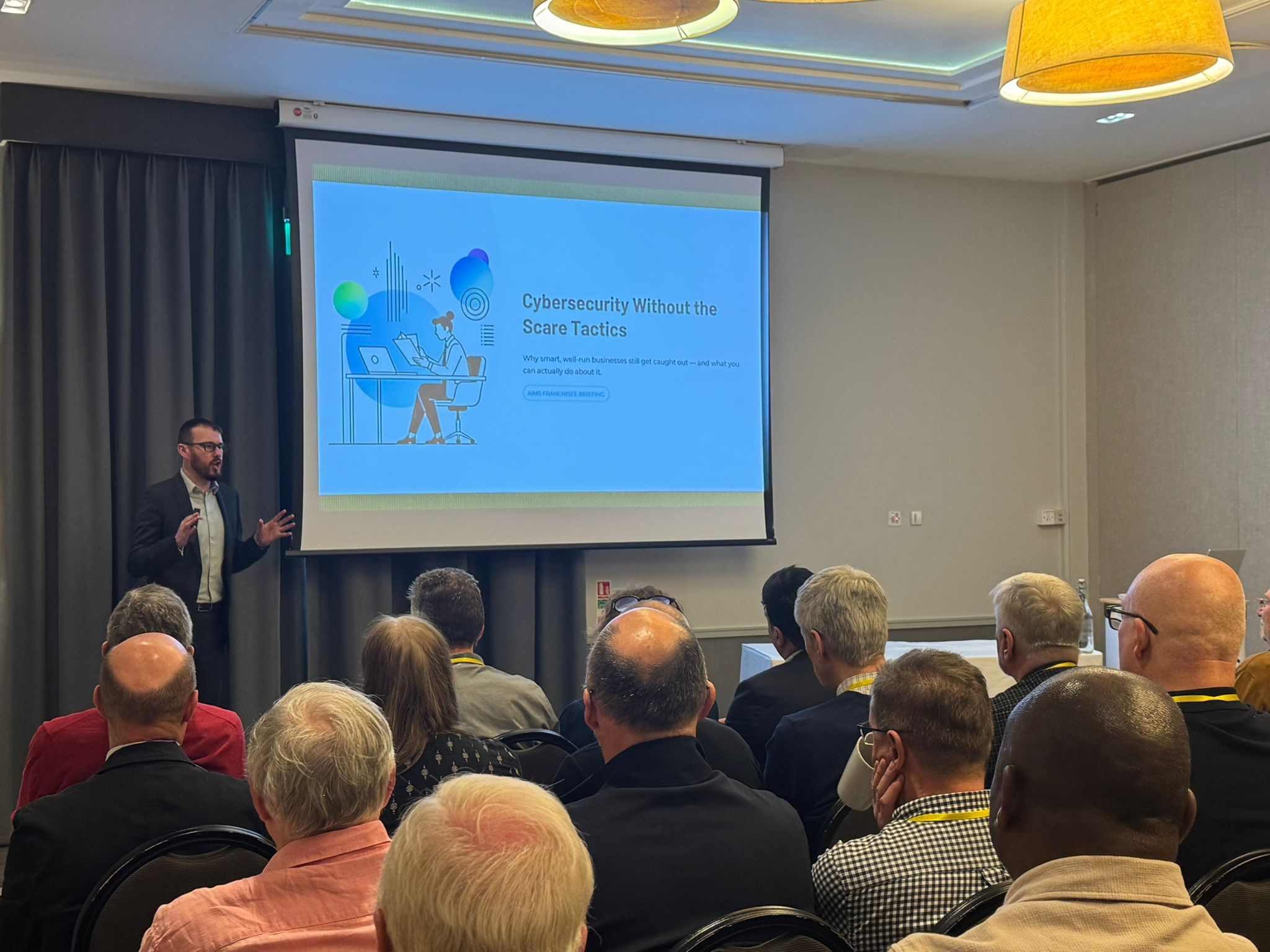
I've been to enough business events to know that if you want to get a room full of people worried, you only need to start talking about cyber security.
Tell them hackers are trying to steal their money, ransomware could bring their business to a standstill or a single employee mistake could cost them everything, and you'll probably have their attention.
Throw in a few frightening statistics, maybe a story about a company that lost a considerable amount of money. By the time you're done, people will wonder how they've survived this long without being hacked.
It's probably an effective way to sell cyber security, especially if the listener doesn't understand enough to challenge what they're being told. But I do question how much we've actually helped somebody if they leave frightened of something they still don't understand.
I've built my career working with businesses on IT and cyber security, and these days I spend more and more time speaking to audiences about technology. One thing I've become particularly conscious of is how easily people present cyber security as something to fear rather than something they can understand and act on.
The threats are real, and I've seen enough of what happens when things go wrong to know that businesses shouldn't be complacent. But frightening somebody into taking action isn't the same as helping them make a good decision.
I want people to leave one of my talks understanding something they didn't understand when they arrived. I want them to recognise the risks that actually matter to their business and feel confident enough to ask better questions about how those risks are being managed.
If all I've achieved is making somebody afraid to open their emails, I've probably done a fairly poor job.
Fear is a very convenient way to sell cyber security
There's a reason so much cyber security marketing focuses on what could go wrong.
The potential consequences are serious. Businesses can lose access to important systems, money can be stolen and confidential information can fall into the wrong hands. Recovering from an incident can involve considerable disruption, even when an organisation has done a reasonable job of preparing for it.
Those are legitimate risks, and business owners deserve to understand them.
But there's a difference between explaining a risk and using the worst possible outcome to pressure somebody into buying a product.
I've seen messaging that suggests every business is one click away from disaster, often followed by an invitation to buy whatever security service the company is promoting.
The message rarely is that businesses should understand their existing arrangements, identify gaps and make informed decisions about improving them. Instead, it says the danger is everywhere, the consequences will be catastrophic, and the safest thing to do is hand over your money.
I can understand why that approach might work commercially. Cyber security isn't always easy to explain, especially to business owners who already have enough to think about. Fear gets attention without requiring much explanation.
But I don't think it's a particularly responsible way to build trust.
If somebody came to me worried about their business being attacked, I'd want to understand what systems they rely on, what protection they already have and where they're most exposed before recommending they spend money.
For one business, the most useful improvement might be ensuring employees use stronger methods to sign in to their accounts. For another, it could be confirming whether their backups would actually let them recover after a serious incident.
Neither conversation needs to involve telling the owner their business is about to collapse.
If the only way I can persuade someone that a recommendation is worthwhile is by frightening them, perhaps I haven't explained it properly.
The numbers are serious enough without exaggerating them
I do use statistics when I'm speaking about cyber security, because they can help people understand how widespread certain threats have become.
The UK Government's Cyber Security Breaches Survey 2025/26 found that 43% of businesses identified a cyber security breach or attack during the previous twelve months. Phishing was the most commonly reported type, identified by 38% of businesses surveyed.
Those are significant numbers, and business owners should pay attention, but we need to understand what those figures actually represent before jumping to conclusions.
The survey includes attempted attacks as well as incidents where something more serious happened. A business that identifies a phishing email and successfully prevents an employee from responding isn't in the same position as a company that's had its accounts compromised and money stolen.
Both might appear in the figures, but the outcomes are very different.
I don't think it helps anyone when those distinctions get lost because somebody wants to make a statistic sound more frightening.
The same goes for the claim that it's only a matter of time before every business suffers a serious cyber attack. There are reasons to prepare for incidents, and assuming you'll never be targeted would be foolish. But the available evidence doesn't support presenting a devastating breach as inevitable.
I've worked with organisations where the systems record substantial numbers of suspicious sign-in attempts. For someone unfamiliar with how these attacks work, seeing hundreds or thousands of attempts against accounts can be alarming.
The important question is what those attempts tell us.
Were they blocked? Did any succeed? Did appropriate authentication controls protect the accounts? Is there evidence that somebody actually gained access?
A large number alone doesn't answer those questions.
You can make almost any threat sound terrifying by presenting the most dramatic figure without explaining what happened behind it.
I'd rather spend time helping somebody understand the difference between an attempted attack and a successful compromise. That knowledge is much more useful than sending them home convinced that criminals are already inside their systems.
Cyber criminals aren't magicians
One thing that frustrates me about how cybercrime is sometimes reported is the impression it gives that attackers have almost supernatural abilities.
Businesses hear about sophisticated criminals operating worldwide, using advanced techniques to bypass security and steal information from organisations that seem far better equipped than they are.
It's not surprising that a small business owner might conclude they can do very little to protect themselves.
Some cyber attacks are genuinely sophisticated, but many successful incidents involve weaknesses businesses could have addressed. Stolen passwords remain useful to criminals, poorly protected accounts are attractive targets and unpatched software can create opportunities for attackers.
None of that makes protecting a business easy, and no product can guarantee nothing will go wrong. But businesses can do practical things to make attacks harder and reduce the consequences if one succeeds. I think we'd achieve far more by helping people understand those measures than by leaving them convinced they're powerless against cybercriminals.
If I'm talking about multi-factor authentication, for example, I don't need to start with a technical lecture about identity security. I can explain that even if someone steals your password, another barrier should prevent them from accessing your account.
Then I can explain why some forms of authentication provide stronger protection than others, particularly against phishing.
The objective isn't to impress people with terminology. It's to help them understand why the protection matters and what questions they should ask whoever manages their IT.
I regularly speak to audiences who aren't particularly interested in how the underlying technology works. They have businesses to run, employees to manage and customers to look after.
They don't need to become cyber security specialists, but they should understand enough to make sensible decisions about the risks they're responsible for.
The moment we make the subject unnecessarily complicated, we give people another reason to switch off and leave it to somebody else.
Making people frightened of mistakes can make incidents worse
One of my biggest concerns about frightening employees with cyber security warnings is that it can make them reluctant to admit when something goes wrong. When you're dealing with a possible security incident, the last thing you want is someone to stay quiet because they're worried about getting in trouble.
We've all heard warnings about suspicious links and malicious attachments. Businesses provide training, send reminders and tell employees to be careful about what they open.
That's sensible, as long as the training reflects how attacks actually work and gives people useful information.
But if employees take away the message that one mistake could destroy the business, what happens when someone thinks they've made that mistake?
Imagine clicking a link in an email and then realising something doesn't feel right.
You might not know whether anything harmful has happened. Perhaps you entered your password before becoming suspicious, or downloaded a file you now wish you'd ignored.
I want that employee to report it straight away.
I want them to feel comfortable contacting the IT team and explaining exactly what happened, because the sooner somebody knows about a potential incident, the sooner they can investigate and take appropriate action.
If an employee thinks they'll be humiliated for falling for something, accused of being careless or blamed for every consequence that follows, they may keep quiet and hope nothing happens.
That's far more dangerous.
I've dealt with compromised accounts and investigated suspicious activity, and I try to avoid making anyone feel that reporting a problem was the wrong decision.
We still need to establish what happened and whether the employee followed the organisation's procedures. Sometimes someone ignores repeated warnings or acts in a way that requires management to intervene.
But treating every person who falls for an attack as an idiot is neither fair nor particularly useful.
Criminals deliberately create messages that look convincing. Some exploit existing business relationships, while others use information to make a request seem familiar or legitimate.
You can be experienced, careful and reasonably knowledgeable about technology and still make a mistake.
That's why security shouldn't depend entirely on people being perfect.
A business needs technical safeguards that reduce the likelihood of a successful attack, but it also needs employees who know what to do when they notice something suspicious.
And they need to believe that reporting something promptly is better than staying quiet.
Security awareness shouldn't be an annual exercise in telling people off
I've sat through enough presentations to recognise when someone has turned cyber security training into a list of things employees must never do.
Don't open suspicious emails. Don't reuse passwords. Don't click links you don't recognise.
The advice isn't always wrong. The problem is that people hear it repeatedly without necessarily learning how to make better decisions in the situations they actually face.
Some advice is so broad that it becomes hard to follow.
Telling somebody never to click a link in an email isn't particularly practical when their job involves receiving information from customers and suppliers throughout the day. They need to understand when a request deserves extra scrutiny and how to verify it without relying on the potentially suspicious message itself.
For example, if someone receives an unexpected request to change bank details, I'd want them to understand why that deserves checking through an established, trusted contact method.
That's more useful than telling them to look out for spelling mistakes, particularly when convincing fraudulent messages can be written perfectly well.
We also need to consider how we deliver training.
If you put people in a room for an hour, overwhelm them with examples of terrible things that have happened to other businesses and finish with a test, they may remember a few frightening stories.
Will they remember what to do six months later when something unusual appears in their inbox?
I'm not convinced they necessarily will.
When I'm speaking to a room full of business owners, I can usually tell if I've lost them. Their expressions change, they stop engaging and before long they're probably wondering how much longer I've got left. That's why I try to explain cyber security in terms people can relate to, with a bit of humour where it fits. I'd much rather have somebody interrupt me to ask what multi-factor authentication actually means than spend half an hour nodding along because they don't want to look stupid in front of everyone else.
Training should give people confidence to recognise potential problems and know where to go for help. If it leaves them feeling stupid or afraid to use the systems they need for work, we've missed the point.
Businesses also need to stop confusing security products with security
I've had conversations with business owners who genuinely believe they're well protected because they're paying for antivirus software, a firewall and a collection of other security services. But when we look at what's actually in place, it sometimes becomes clear that nobody has checked whether those products are configured properly or doing what the business thinks they are.
I don't blame business owners for not understanding every technical detail of the services they're buying. That's why they employ people like me. But I do think the cyber security industry has a responsibility to explain what those services actually protect against, rather than allowing customers to believe that buying more products automatically means they're more secure.
Security also tends to become a conversation about which product a business should buy next. I find that frustrating because sometimes the biggest improvement doesn't involve buying anything. It might mean correcting an overlooked setting or addressing a weakness someone identified months ago but never got around to fixing.
If we're genuinely trying to help businesses become more secure, we should start by understanding where they're vulnerable and whether their existing protection is doing its job. I'd rather tell somebody they don't need another product than sell them something that makes very little difference to the risks they're actually facing.
And if a business does need to spend money, I want the owner to understand why. Not because I've produced a frightening report full of technical terminology, but because I've explained the problem well enough for them to make a sensible decision.
You can be honest about the consequences without predicting disaster
Avoiding scare tactics doesn't mean avoiding difficult conversations. I've had to tell business owners that their security arrangements aren't good enough, and sometimes that means explaining consequences they'd probably rather not think about.
If a business has no reliable backup of information it depends on, I'll explain what could happen if that information becomes unavailable. If an organisation has ignored a serious security weakness, I won't pretend it doesn't matter to make the conversation more comfortable.
But there's a difference between being clear about a genuine risk and exaggerating it to persuade somebody to spend money. I'm not going to tell a business owner they're guaranteed to be attacked next week when I have absolutely no way of knowing that.
My job is to explain what could go wrong, how exposed the business actually is and what can reasonably be done about it. Once they understand that, they can make an informed decision without me needing to frighten them into it.
And where the likelihood of something happening is difficult to assess, I'd rather admit that than pretend I can predict the future. There's no point giving business owners false confidence in a risk assessment just because somebody wants to sound certain.
I also believe people working in cyber security have a responsibility to be clear about what they're selling.
If a product reduces a particular risk, explain which risk it addresses. If it doesn't protect something else, don't let the customer believe it does.
And if the recommended service won't resolve the underlying problem, be prepared to say that.
I don't see much value in selling people peace of mind if it depends on them misunderstanding what they've actually bought.
A cyber security conversation should end with a plan
When somebody finishes reading an article or listening to a talk about cyber security, I think they should have a better idea of what to do next.
That doesn't mean handing everybody a shopping list of products.
For a small business owner, that might mean checking whether employees have appropriate protection on their accounts or asking their IT provider how quickly they could recover important information if something went wrong. A larger organisation might need to look more closely at how incidents are reported and whether the people responsible actually know what they're expected to do.
The advice will vary by organisation, but I think people should leave a cyber security conversation knowing what deserves their attention, rather than feeling they've been given another list of products to buy.
The National Cyber Security Centre publishes guidance for small organisations, including steps they can take to better protect against common threats. Its advice doesn't begin by insisting every business must invest in the most sophisticated technology available.
It recognises that organisations need manageable measures that address real risks.
That's the sort of approach I'd encourage.
Understand what matters to your business and where you're vulnerable. Establish what protection you already have before assuming you need something new, then make sure the people responsible for maintaining it are actually doing so.
And when you discover something isn't right, deal with it.
You don't need to become obsessed with cyber security to take it seriously, any more than you need to become an accountant to understand your business finances.
You do, however, need to accept that it's a business responsibility, not something you can ignore until a problem appears.
My job is to make that responsibility easier to understand and manage.
I'd rather people understood the risk than feared it
I've spent enough time dealing with technology problems to know that cyber security incidents can be stressful, disruptive and expensive. I'm certainly not going to pretend every business can protect itself perfectly or that an attack's consequences are always minor.
But I also know how much difference sensible preparation can make.
A business that understands its important systems, has appropriate safeguards and knows how to respond when something goes wrong is in a far better position than one that has spent years being frightened by warnings without doing anything useful about them.
I think the cyber security industry has a responsibility to help businesses reach that position.
We should be prepared to challenge poor decisions, explain risks properly and tell customers when something needs attention. That's part of doing the job well.
But we should also recognise that the person running a small business doesn't necessarily want to hear an hour of technical terminology or another lecture about how irresponsible everybody is.
They want to know what matters to them and what they should do about it.
When I speak about cyber security, I want people to enjoy the experience enough to engage with the subject, even if they would normally rather avoid it. I want them to ask questions during the session and have useful conversations afterwards.
And if they leave with a better understanding of how to protect their business, I'd consider that a far greater success than frightening them into buying something they don't properly understand.
There are plenty of genuine reasons to take cyber security seriously. We don't need to manufacture any more.
I'd rather earn somebody's trust by helping them understand the risks than win their business by making them afraid of what might happen.
Continue the conversation